---
title: Prescription drug addiction
description: Learn more about prescription drug addiction.
image: https://armadarecovery.com/hubfs/Prescription%20drug%20addiction.png
---
[ ](https://armadarecovery.com/)
- Why Armada
Why Armada
[Our Mission Through immersive, deeply personalized recovery programs, we help clients heal from addiction, trauma, and abuse.](https://armadarecovery.com/our-mission)
[Care Approach On your way to healing, we know how to avoid additional hurt. To ensure clients are never reduced to inmates,](https://armadarecovery.com/care-approach)
[Armada Leadership Meet the Armada leadership team, and see how our personal stories make us your strongest ally.](https://armadarecovery.com/armada-leadership)
[Blog Learn about drug rehab and addiction treatment in Ohio](https://armadarecovery.com/blog)
- [Locations](https://armadarecovery.com/our-centers)
Locations
[Our Centers When you’re looking for a family, we’re in a community near you.](https://armadarecovery.com/our-centers)
[Armada Detox - Akron, Ohio](https://armadarecovery.com/akron-oh-detox)
[Armada Recovery - Akron, Ohio](https://armadarecovery.com/akron-oh-drug-rehab)
[Armada Recovery - Dayton, Ohio](https://armadarecovery.com/dayton-oh-drug-rehab)
- Care Levels
Care Levels
[ Detox Start your recovery journey with a safe and supportive detoxification process.](https://armadarecovery.com/detox)
[ Partial Hospitalization (PHP) If you’re not ready to live at home, and still suffer from moderate/severe cravings, we can help you recover in a structured environment.](https://armadarecovery.com/partial-hospitalization-php)
[ Intensive Outpatient (IOP) Recovery doesn’t end overnight; neither should your support. We’re here for you for as long as you need us.](https://armadarecovery.com/intensive-outpatient-iop)
[ Outpatient (OP) Ease back into sober living on your terms, with outpatient care that meets you where you are and gets you where you’re going.](https://armadarecovery.com/outpatient-op)
- Therapies
Therapies
[Cognitive Behavior Therapy (CBT) CBT is a type of psychotherapy that focuses on the adjustment of dysfunctional emotions, behaviors, and thoughts.](https://armadarecovery.com/cognitive-behavior-therapy-cbt)
Dialectical Behavior Therapy (DBT)
When everything you feel is overwhelming, our DBT can give you the resources you need
[Motivational Interviewing (MI) Finding the motivation to get, and stay, sober](https://armadarecovery.com/motivational-interviewing)
[Holistic Therapy Holistic therapy is a supplemental therapy program designed to improve your emotional and spiritual well-being.](https://armadarecovery.com/holistic-therapy)
[Recovery Therapy Benefit from a full spectrum of science-supported treatment.](https://armadarecovery.com/recovery-therapy)
[Recreational Therapy With a wide array of enriching activities, we can help you get in touch with who you are outside of your addiction.](https://armadarecovery.com/recreational-therapy)
- All We Treat
All We Treat
[ Alcohol Addiction Put down that drink and drink in life’s beauty.](https://armadarecovery.com/alcohol-addiction)
[ Opiate Addiction Take our hand. Take back your life.](https://armadarecovery.com/opiate-addiction)
[ Cocaine Addiction Clear your lungs. Clear your mind.](https://armadarecovery.com/cocaine-addiction)
[ Crystal Meth Addiction Take our hand. Take back your life.](https://armadarecovery.com/crystal-meth-addiction)
[ Prescription Drug Addiction Learn to grow beyond your pain.](https://armadarecovery.com/prescription-drug-addiction)
[ Marijuana Addiction Ditch the dope. Dive back into life.](https://armadarecovery.com/marijuana-addiction)
[ Heroin Addiction Quit the heroin. Find your inner hero.](https://armadarecovery.com/heroin-addiction)
[ Polydrug Abuse You are never beyond help.](https://armadarecovery.com/polydrug-abuse)
[ Fentanyl Don’t take the risk. Let us help you.](https://armadarecovery.com/fentanyl-addiction)
- [Care with Us](https://armadarecovery.com/care-with-us)
- Contact
Contact
[Contact Us Complete the form for more information about our rehab services.](https://armadarecovery.com/contact-us)
[Insurance Verification Fill out the forms to verify your insurance coverage with us.](https://armadarecovery.com/insurance-verification)
[What to Expect We’re here to welcome you with open arms—and without judgment.](https://armadarecovery.com/what-to-expect)
- [Call Now > 888-202-4232](tel:+1888-202-4232)
# Prescription drug addiction
Share Article
Dec 2, 2025 3:19:39 PM
Prescription drug addiction has become one of Ohio’s most painful public health challenges. In 2023, there were 4,452 unintentional drug overdose deaths across the state, with 8% of deaths involving prescription benzodiazepines and 7% involving opioids like oxycodone and hydrocodone. While these medicines were designed to help ease pain and discomfort, they have become just as deadly as any illicit drugs found on American streets. If you are or someone you care about is being affected by prescription drug addiction, knowing the causes, symptoms, and treatment options could save a life.
| Key Takeaways |
| --- |
| Prescription drug addiction remains one of Ohio's most serious public health challenges. |
| More than 4,400 Ohioans died from unintentional overdose in 2023. |
| Benzodiazepines and prescription opioids continue to play a major role in overdose deaths. |
| Addiction often progresses through stages: abuse, dependence, and full addiction. |
| Professional detox and rehabilitation are essential for long‑term recovery. |
### What is prescription drug addiction?
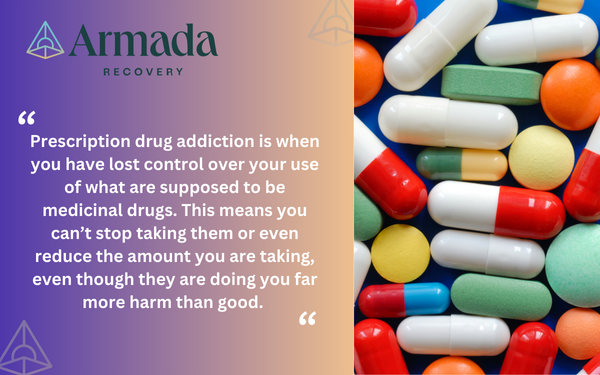
Prescription drug addiction is when you have lost control over your use of what are supposed to be medicinal drugs. This means you can’t stop taking them or even reduce the amount you are taking, even though they are doing you far more harm than good.
Between 1999 and 2013, the number of deaths from prescription-opioid overdose in Ohio jumped from about 467 to 2,347, and the state has been one of the worst hit by the opioid crisis. And yet, prescription rates for a range of potentially deadly drugs remain high across Ohio.
Some of the most common and dangerous forms of prescription drug addiction include:
- Opioid and opiate addiction
- Benzodiazepine addiction
- Sleeping pill addiction
- Prescription stimulant addiction
| Metric | Value |
| --- | --- |
| Total unintentional drug overdose deaths (2023) | 4,452 |
| % involving prescription benzodiazepines | 8% |
| % involving prescription opioids (e.g., oxycodone, hydrocodone) | 7% |
### What are the symptoms of prescription drug addiction?
Spotting the signs of prescription drug addiction is sometimes harder than with cocaine or heroin, because you may have originally taken them on your doctor’s instructions. However, if you spot any of these prescription drug addiction symptoms, you should take them seriously:
- Often taking more pills than your doctor told you to
- Running out of your prescription sooner than you should
- Feeling unwell when you miss a dose or try to cut down
- Crushing, snorting, or mixing pills with alcohol to make the effects stronger
- Keeping your pill use secret or getting touchy when someone asks about your medication
- Mood swings when on prescription drugs or when you can’t get any
- Drowsiness or agitation
- Increased sensitivity to pain
- Changes in sleep patterns
- Poor coordination or dizziness
- Confusion or poor concentration
### What are the stages of prescription drug addiction?
Prescription drug addiction often starts with slight changes in how you use your medication until eventually you have no control. This often takes place over three rough stages:
#### 1. Prescription drug abuse
Some people’s addiction begins with a genuine prescription, while others start using drugs they got from a friend or bought illegally. Most start with a small dose, which slowly grows as the effects do less and less. This is called “prescription drug tolerance,” and it can develop very quickly depending on your body chemistry and the type of drug you are taking.
#### 2. Prescription drug dependence
Increased doses cause chemical changes in your brain and body. These vary by substance, but they usually involve your brain no longer producing natural chemicals like dopamine or GABA. When this happens, if you stop, your brain chemical levels are temporarily off balance, so you go into prescription drug withdrawal.
It is withdrawal that produces cravings and all the other unpleasant symptoms you have likely felt if you’ve quit before. Many people relapse at this point and keep using prescription drugs because they now depend on them physically.
#### 3. Prescription drug addiction
Full drug addiction means that the physical dependence has been joined by an emotional or psychological one. The reasons for this can differ, but you may now be using prescription drugs for stress, depression, or because they have become such an ingrained part of your routine. Whatever the case, the compulsion to keep using is now more powerful than your will to quit or your recognition of the harm being done.
### What causes prescription drug addiction?
As explained above, different prescription drugs change your brain and body until you become dependent on them just to feel “okay” or to avoid withdrawal. But there is a wide range of other causes that make you more or less likely to become addicted. These include:
- A history of substance abuse or addiction in your family
- How easily accessible prescription drugs are
- Taking prescription drugs with no medical supervision
- Mental health symptoms that you try to manage with prescription drugs
- Peer pressure or friends who use prescription drugs
- Academic pressure, which is often associated with prescription stimulant use
- Chronic injury or pain, and taking prescription drugs beyond their recommended use
- Irresponsible prescription drug marketing and prescribing (both major causes of the Opioid Crisis)
### What are the dangers and side effects of prescription drug addiction?
It is a common misconception that prescription drugs are safer than illegal ones. In fact, many of them have dangerous side effects, and are sometimes many times stronger than illicit street drugs. Some of the biggest dangers of prescription drug abuse and addiction include:
- Coma
- Seizures
- Tremors
- Hallucinations
- Heart disease
- Breathing issues
- Dangerously low or high blood pressure
- Fatal prescription drug overdose
### What does treatment for prescription drug addiction involve?
Treatment for prescription drug addiction usually begins with detox, particularly for opioids and benzodiazepines, which can cause dangerous withdrawal. Armada Recovery offers inpatient prescription drug detox, so our team can look after you and manage symptoms with medication and emotional support.
You will then begin a program of therapies as part of our prescription drug rehab plans. These are offered at both of our Akron and Dayton [treatment centers](https://armadarecovery.com/our-centers) on an outpatient basis, so you can take part in therapy while living at home.
After you have finished rehab, we then offer extra support to help you adjust to your new sober life. For some people, this involves [partial hospitalization](https://armadarecovery.com/partial-hospitalization-php), while others benefit from additional [outpatient care](https://armadarecovery.com/outpatient-op). The right course is decided between you and your care team so we can give you the best treatment possible.
### Get help for prescription drug addiction today
If prescription drugs are threatening your life or harming someone you love, Armada Recovery can help. [Contact us](https://armadarecovery.com/contact-us) today, and our expert team will answer all your questions and help you get started.
| Frequently Asked Questions | Answer |
| --- | --- |
| Can you die from prescription drug addiction? | Yes. A prescription drug overdose can be fatal, especially with opioids or benzodiazepines. |
| How can I help a loved one with a prescription drug addiction? | Approach them with compassion, encourage professional help, and offer support during treatment. |
| Is there a cure for prescription drug addiction? | There is no instant cure, but long‑term recovery is possible with detox, therapy, and aftercare support. |
### References
https://content.govdelivery.com/attachments/OHIOGOVERNOR/2024/10/30/file\_attachments/3052169/2023%2BUnintentional%2BDrug%2BOverdose%2BAnnual%2BReport\_FINAL.pdf
https://www.samhsa.gov/data/sites/default/files/reports/rpt39467/2021NSDUHsaeSpecificStatesTabs122022\_0/NSDUHsaeOhio2021.pdf
https://ccbh.net/wp-content/uploads/2025/04/IncreasingRacialDisparitiesInOhioOverdoseRates\_3.2025.pdf
https://www.apha.org/getcontentasset/9d45c5ab-4694-4401-9683-40288bb58147/7ca0dc9d-611d-46e2-9fd3-26a4c03ddcbb/ohio\_pdo.pdf
[Prescription Drug](https://armadarecovery.com/blog/tag/prescription-drug)
[ All behind you TM](https://armadarecovery.com/)
- Why Armada
- [Our Mission](https://armadarecovery.com/our-mission)
- [Care Approach](https://armadarecovery.com/care-approach)
- [Armada Leadership](https://armadarecovery.com/armada-leadership)
- [Blog](https://armadarecovery.com/blog)
- Communities
- [Our Centers](https://armadarecovery.com/our-centers)
- [Life Stories](https://armadarecovery.com/life-stories)
- Care Levels
- [Partial Hospitalization (PHP)](https://armadarecovery.com/partial-hospitalization-php)
- [Intensive Outpatient (IOP)](https://armadarecovery.com/intensive-outpatient-iop)
- [Outpatient (OP)](https://armadarecovery.com/outpatient-op)
- Therapies
- [Cognitive Behavior Therapy (CBT)](https://armadarecovery.com/cognitive-behavior-therapy-cbt)
- Dialectical Behavior Therapy (DBT)
- [Motivational Interviewing](https://armadarecovery.com/motivational-interviewing)
- [Holistic Therapy](https://armadarecovery.com/holistic-therapy)
- [Recovery Therapy](https://armadarecovery.com/recovery-therapy)
- [Recreation Therapy](https://armadarecovery.com/recreational-therapy)
- All We Treat
- [Alcohol Addiction](https://armadarecovery.com/alcohol-addiction)
- [Cocaine Addiction](https://armadarecovery.com/cocaine-addiction)
- [Prescription Drug Addiction](https://armadarecovery.com/prescription-drug-addiction)
- [Heroin Addiction](https://armadarecovery.com/heroin-addiction)
- [Opiate Addiction](https://armadarecovery.com/opiate-addiction)
- [Crystal Meth Addiction](https://armadarecovery.com/crystal-meth-addiction)
- [Marijuana Addiction](https://armadarecovery.com/marijuana-addiction)
- [Polydrug Abuse](https://armadarecovery.com/polydrug-abuse)
- Careers
- [Care with Us](https://armadarecovery.com/care-with-us)
- Get Help Now
- [Insurance Verification](https://armadarecovery.com/insurance-verification)
- [What to Expect](https://armadarecovery.com/what-to-expect)
- What to Pack
- Other FAQs
- Contact us
- [Info@armadarecovery.com](mailto:Info@armadarecovery.com)
- [(888) 202-4232](tel:+18882024232)
- [Privacy Policy](https://armadarecovery.com/privacy-policy)
- Armada Recovery of Akron
- 323 S Main St Unit 301, Akron, OH 44308
- [(234) 271-5785](tel:+12342715785)
- Armada Recovery of Dayton
- [1628 Springfield St, Dayton, OH 45403](https://armadarecovery.com/dayton-oh-drug-rehab)
- [(888) 202-4232](tel:+18882024232)
- Armada Recovery Detox of Akron
- [105 E Market St, Akron, OH 44308](https://armadarecovery.com/akron-oh-detox)
- [(888) 202-4232](tel:+1888-202-4232)
© 2026 Armada Recovery All Rights Reserved
```json
{
"@context" : "https://schema.org",
"@type" : "BlogPosting",
"author" : {
"@type" : "Person",
"name" : "Armada",
"url" : "https://armadarecovery.com/blog/author/armada"
},
"dateModified" : "2025-12-02T20:19:39.217Z",
"datePublished" : "2025-12-02T20:19:39.000Z",
"headline" : "Prescription drug addiction",
"image" : [ "https://armadarecovery.com/hubfs/Prescription%20drug%20addiction.png" ],
"mainEntityOfPage" : {
"@id" : "https://armadarecovery.com/blog/prescription-drug-addiction",
"@type" : "WebPage"
},
"publisher" : {
"@type" : "Organization",
"logo" : {
"@type" : "ImageObject"
},
"name" : "Armada Recovery"
}
}
```